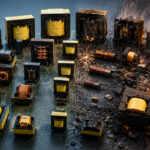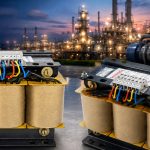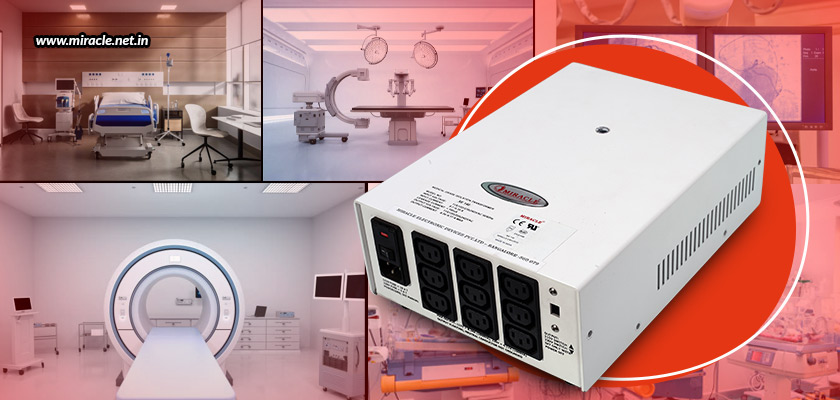
Hospitals are no longer those simple two or three roomed establishments that once catered to basic medical needs. Today, they have transformed into expansive, multidisciplinary centres, equipped with cutting-edge technologies and specialized departments for distinct tasks. From intensive care units and operating theatres, to diagnostic labs and recovery rooms, every room is filled with a number of electrical and electronic systems. And, as medical infrastructure becomes increasingly dependent on technology, the demand for clean, stable, and safe electrical power has never been greater. Power surges, harmonics, and transients can disrupt the sensitive medical equipment, and pose safety risks to patients. To counter these challenges, hospitals today rely on one key component – the medical isolation transformer in India, which provides electrical separation, filtering of interference, and stabilization of voltage. These devices form the backbone of hospital power networks, ensuring safe, reliable, and uninterrupted operation across all critical care areas.
Intensive Care Units (ICUs)
The ICU is one of the most important rooms in a hospital, where patients are kept when they are in the most critical state. Here, they are connected to multiple life-support systems like ventilators, infusion pumps, defibrillators, and ECG monitors. All of these systems need to work in tandem, and round the clock. Even the slightest electrical irregularity here can prove to be life-threatening. Medical isolation transformers here play a significant role. They electrically isolate all these equipment from the main supply, minimizing leakage current and preventing shocks. In addition, they also stabilize the voltage to maintain consistent operation across all devices. By filtering harmonics and transient disturbances, these transformers help sensitive sensors and monitors display accurate readings without interference. This preserves both patient safety and equipment performance in the most critical ward of the hospital.
Neonatal Intensive Care Units
Neonatal Intensive Care Units are another critical ward in a hospital, dedicated to the care of premature and newborn infants who need incubators, ventilators, and cardiorespiratory monitors for survival. In such delicate environments, even minor voltage fluctuations of EMI can prove to be life-threatening for these tiny fragile patients. Medical isolation transformers ensure a low-leakage electrical environment by filtering disturbances and maintaining balanced grounding. By minimizing EMI and power irregularities, these transformers enable precision monitoring and uninterrupted operation of all essential life-support equipment. This stable interference-free electrical supply ensures that all monitoring equipment functions with precision, allowing continuous observation of every vital parameter. It also enhances the reliability and longevity of life-support devices, helping healthcare professionals to fully concentrate on providing safe, effective, and uninterrupted neonatal care to the most fragile patients.
Operating Theatres
Operating theatres are a very critical section where surgical teams carry out the most crucial surgeries. This room is also equipped with a number of electrical and electronic devices like electrosurgical units, anaesthesia machines, imaging systems, and more, all of which demand uninterrupted power. Even a momentary voltage drop can cause a surgical delay and compromise on the procedure. Medical isolation transformers play a crucial role here by filtering noise, neutralizing surges, and maintaining isolation between circuits, helping operating theatres to run on stable power quality. They also prevent ground loops, which can introduce electrical interference into monitoring equipment and imaging devices, leading to inaccurate readings. Moreover, the controlled grounding environment provided by these transformers reduces shock hazards for both patients and surgical staff. By mitigating transient voltage spikes, these transformers safeguard the highly sensitive surgical instruments, supporting precision and safety.
Pathology and diagnostic laboratories
Most hospitals first carry out a number of tests for the patients before any surgery or treatment. These tests require spectrometers, centrifuges, electronic analyzers, and automated diagnostic platforms that can perform thousands of tests everyday with precision. These high-performance systems demand clean stable power free from interference to maintain calibration and ensure data accuracy. Medical isolation transformers can help by filtering and regulating the power, protecting the sensitive equipment from voltage fluctuations, surges, and electromagnetic noise. They also minimize electrical cross-talk between interconnected devices, preventing false readings or data corruption. Even the slightest analytical deviation in such laboratories can impact diagnostic accuracy or patient safety, but with medical isolation transformers in place, the equipment is safeguarded and every test result generated is reliable, precise, and consistent.
Radiology rooms
MRI scanners, CT machines, X-rays, and ultrasound systems are among the most used machines today, and each one is energy-demanding and electromagnetically very sensitive. Even minor power fluctuations or harmonic distortions can affect the quality of images they render, making it difficult to interpret, or even result in wrong interpretations! Medical isolation transformers help by isolating imaging equipment from electrical disturbances that may originate elsewhere in the hospital. They filter high-frequency noise and smooth out waveform distortions, ensuring consistent image clarity and diagnostic accuracy. Moreover, these transformers also act as buffers, preventing the disturbances from spreading across the hospital’s electrical network. The medical professionals can thus have a cleaner and more stable environment for precisely accurate diagnosis.
Emergency Departments
Emergency departments incorporate ventilators, imaging machines, defibrillators, and automated medication dispensers, which function continuously. Rapid load changes can cause voltage fluctuations or transient spikes that can affect equipment performance and patient safety. Such sudden surges in power needs to managed so that the life-saving systems can operate continually and simultaneously. Medical isolation transformers act as the first line of defence here as they filter out electrical noise, stabilize voltage, and prevent surges from propagating through the network. By creating electrically isolated circuits, they ensure that an overload or fault in one area does not disrupt others. This kind of classified protection allows critical systems to run seamlessly during emergencies, enabling medical teams to focus on rapid and uninterrupted patient care even under high-pressure peak-load conditions.
Dialysis rooms
Dialysis rooms need highly sensitive medical equipment to work that can filter and circulate a patient’s blood continuously over long treatment sessions. These dialysis machines demand precise and stable electrical power to function effectively. Even a minor voltage fluctuation or transient fault here can disrupt the filtration accuracy or trigger system alarms. Medical isolation transformers play a critical role here by filtering electrical noise, protecting against voltage spikes, preventing disturbances from affecting connected equipment, and providing steady interference-free power to these life-sustaining systems. By maintaining a consistent power supply, these transformers not only enhance machine performance and reliability, but also reduce the risk of treatment interruptions, thus ensuring patient safety, comfort, and continuous operation throughout the dialysis process.
Recovery and step-down wards
After surgeries or rigorous treatments, patients are shifted from other critical rooms to wards for recovery. This shift from critical to stable care requires continuous and precise monitoring, for which devices like ECG monitors, infusion pumps, and ventilators are required. All these equipment are required to work flawlessly to track vital parameters during the recovery phase. Medical isolation transformers help maintain this reliability by ensuring stable voltage, and shielding the sensitive equipment from the EMI generated by nearby high-energy systems such as surgical lasers, imaging units, or sterilization equipment. By electrically isolating each recovery zone’s power circuit, these transformers prevent faults or disturbances in one area from affecting another. This controlled interference-free electrical environment supports uninterrupted monitoring, enhances patient safety, and ensures a smooth, stable recovery process for post-surgical patients.
From the ICU and operation theatre to laboratories and recovery rooms, medical isolation transformers act like invisible guardians of power quality and patient safety. Investing in high-quality isolation transformers has thus become a cornerstone of medical infrastructure today. This is why most hospitals are turning to Miracle Electronics for the finest medical isolation transformer in India, so as to provide their facilities with reliable, performance-driven solutions designed for critical healthcare environments. With their robust engineering and proven dependability, they help medical institutions ensure safer, smarter, and more efficient operations.