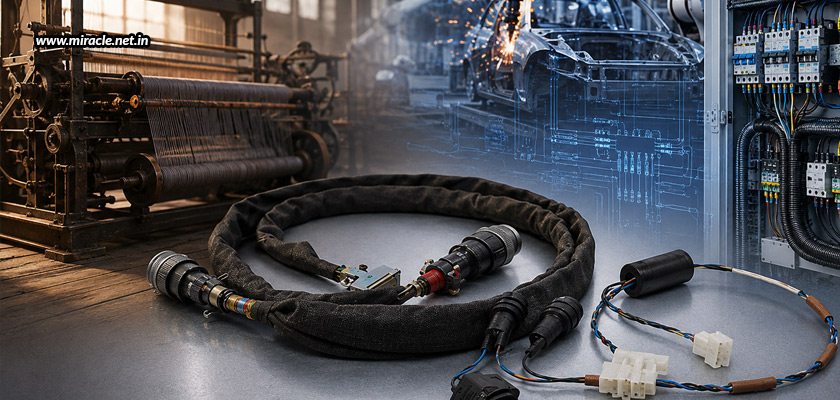
In today’s era of smart devices, automation, and highly integrated electrical systems, it may seem that traditional components have been replaced by advanced alternatives. However, traditional wire looms continue to play a fundamental role in electrical and electronic systems across industries. While innovations like smart harnesses, sensor-integrated cables, and advanced shielding solutions are emerging, the basic wire loom remains essential. These simple protective coverings bundle, organize, and safeguard electrical wires, offering structure, protection, and reliability in increasingly complex environments. From automotive systems to industrial machinery and residential setups, traditional wire looms remain the hidden backbone ensuring safe, efficient, and dependable operation.
Understanding traditional wire looms
A traditional wire loom is a protective tube, sleeve, or conduit designed to hold multiple wires together in an organized bundle. Its primary purpose is to protect electrical wiring from mechanical damage, environmental exposure, and operational hazards such as abrasion, heat, and vibration. Unlike advanced wire management systems that incorporate electronics or monitoring capabilities, traditional wire looms are purely mechanical in nature. They do not rely on sensors or digital systems. Instead, they perform their function through material strength, flexibility, and structural design. Common materials used in traditional wire looms include polyethylene (PE), polypropylene (PP), nylon, and occasionally fabric-based or metal variants depending on the application. Each material offers a different balance of flexibility, durability, and resistance to environmental conditions. Despite their simplicity, these looms form the backbone of almost every electrical system, ensuring that wiring remains safe, organized, and functional over time.
The role of traditional wire looms in modern systems
Modern electrical systems are more complex than ever before. Machines now integrate sensors, controllers, communication modules, and power distribution networks into compact spaces. This increased density of wiring creates a higher risk of entanglement, wear, and electrical failure. Traditional wire looms play a crucial role in managing this complexity. They provide a structured pathway for wires, ensuring that each cable remains in place and protected. Without wire looms, modern systems would face significant risks such as short circuits, signal interference, and mechanical damage. Even in highly advanced industries like aerospace and robotics, wire looms are still used extensively. While some sections of wiring may be enhanced with shielding or smart monitoring, the basic organization and protection still rely on traditional loom structures. Their role is not to compete with advanced systems but to support them by providing a stable and reliable foundation.
Why simplicity still wins in electrical design
One of the key reasons traditional wire looms remain relevant is their simplicity. In engineering, simplicity often translates to reliability. The fewer moving parts or dependencies a system has, the lower the chances of failure. Traditional wire looms do not require power, software, or maintenance beyond physical inspection. They are passive components, which means they continue to function as long as the material remains intact. This makes them extremely dependable in environments where failure is not an option. For example, in automotive systems, a simple split corrugated loom can protect critical wiring harnesses from engine heat, vibration, and oil exposure without adding complexity to the system. Similarly, in industrial machinery, basic looms ensure that wires remain organized even under constant movement and stress. This reliability is why engineers continue to trust traditional wire looms even as more advanced solutions emerge.
Benefits of traditional wire looms
Traditional wire looms provide several exclusive, foundational benefits that make them indispensable in basic and industrial wiring systems where simplicity and reliability are key.
- Fundamental mechanical protection: Traditional wire looms primarily safeguard cables from abrasion, friction, and minor physical wear, ensuring basic but reliable wire safety in everyday applications.
- Simple structural organization: They keep wiring bundles neatly arranged without requiring advanced systems or components, making basic installations easier to manage and understand.
- Low-cost basic solution: One of their strongest advantages is affordability, offering essential cable management without the expense of advanced materials or technologies.
- Ease of use and replacement: Traditional looms are straightforward to install, replace, or modify, making them ideal for quick repairs and standard maintenance work.
- Dependable non-electronic design: Being completely mechanical, they function without power, sensors, or software, ensuring consistent performance with minimal failure risk.
Applications across industries
Traditional wire looms are widely used across almost every industry due to their versatility, reliability, and cost-effectiveness in protecting and organizing electrical wiring systems.
- Automotive industry: They protect engine wiring, battery connections, and electronic control systems from heat, vibration, and abrasion, ensuring long-term performance and safety.
- Industrial manufacturing: Wire looms organize wiring in heavy machinery, control panels, and robotic systems, improving operational efficiency, safety, and ease of maintenance.
- Residential and commercial buildings: They help manage electrical cables behind walls, ceilings, and appliances, reducing clutter, preventing damage, and enhancing electrical safety.
- Aerospace and defence: Even in advanced systems, traditional wire looms provide baseline protection and structured routing alongside specialized components, ensuring reliability in critical applications.
Their universal applicability highlights their continued importance in modern engineering systems.
Why advanced technology has not replaced traditional looms
While advanced technologies continue to evolve, they have not replaced traditional wire looms for several important reasons. First, not every application requires smart monitoring or advanced shielding, as many systems only need basic protection and organized cable management, which traditional looms provide effectively. Second, advanced solutions often still rely on traditional looms as a foundational layer, with even smart wire harnesses using protective sleeves for mechanical safety and durability. Third, reliability remains a key concern, and engineers often avoid unnecessary complexity in critical environments where simpler components reduce potential failure points. As a result, traditional wire looms remain deeply integrated into both basic and advanced electrical systems, continuing to deliver dependable performance across industries.
Traditional wire looms may appear simple, yet their role in modern electrical systems is highly significant. They provide essential protection, organization, and stability in environments where complexity and performance demands continue to increase. These components ensure safe, efficient, and reliable electrical performance. In today’s high-tech, innovation-driven world, traditional wire looms remain a silent yet indispensable backbone of electrical infrastructure, supporting the seamless operation of countless systems across industries. For reliable and high-quality traditional wire looms, manufacturers like Miracle Electronics in India play a key role in delivering dependable solutions for automotive, industrial, and electrical applications. As a leading looms manufacturer in India, they ensure consistent quality, durability, and performance across diverse industry requirements.