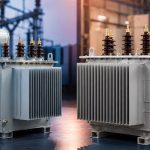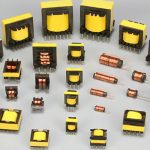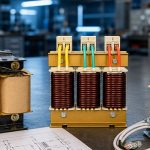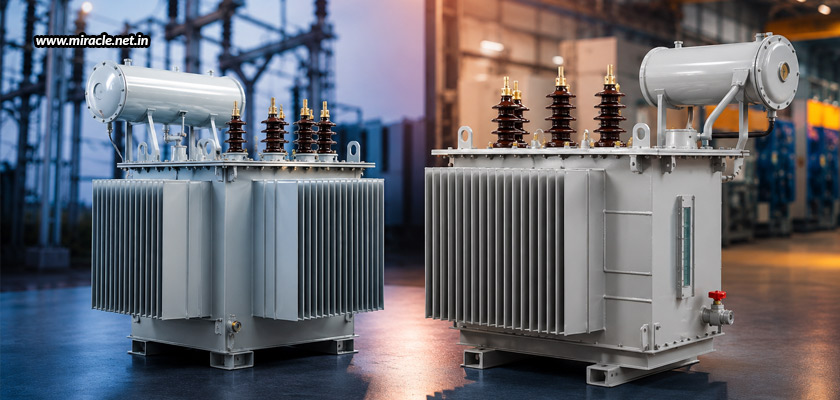
If two transformers have the same 10 KVA rating, why can their performance and efficiency still vary? A 10KVA 110V transformer and a 10 KVA step-up transformer may seem to be the same, but there are subtle differences between them that can significantly affect system performance, energy optimization, and cost efficiency. Because operational inefficiencies are often caused by an incorrect transformer selection, it is important to choose the most apt transformer. This blog explores the engineering differences, practical use cases, and a decision-making framework to help you choose the right transformer for your application and avoid operational inefficiencies.
Voltage matching vs. voltage transformation
While both transformers operate on electromagnetic induction, their functional intent differs. A 10KVA 110V transformer is typically designed for voltage matching applications, where equipment requires a stable 110V supply without major voltage conversion complexity. On the other hand, a 10KVA step-up transformer is designed for voltage elevation, converting lower voltage input into higher output voltage. A 10KVA 110V transformer is commonly used in imported equipment setups, testing systems, and controlled environments where input and output voltage requirements are already closely aligned. And, a 10KVA step-up transformer is essential in systems where power needs to be transmitted efficiently, or where equipment requires higher voltage to operate optimally.
Why a 10KVA rating alone is not enough
Many buyers assume that selecting a transformer based solely on KVA rating ensures compatibility. However, this is one of the most common engineering mistakes. The 10KVA rating only indicates the maximum apparent power capacity. It doesn’t determine the voltage conversion direction, the load behaviour under fluctuating demand, the efficiency at partial loads, or the thermal performance under continuous operation. For example, a 10KVA transformer operating at 110V may behave very differently when compared to a 10KVA step-up transformer operating under load stress conditions in industrial environments. This is where engineering expertise becomes critical, as professionals design transformers not just for capacity, but for real-world operating conditions.
When should you choose a 10KVA 110V transformer?
A 10KVA 110V transformer is ideal in scenarios where voltage stability and compatibility are the primary concerns, not voltage conversion. For instance, in applications where even minor voltage fluctuations can lead to performance issues or equipment damage, voltage consistency is more important than voltage transformation. Some examples include precision instruments, controlled industrial automation setups, laboratory testing equipment, and sensitive electronic systems.
When should you choose a 10KVA step-up transformer?
A 10KVA step-up transformer is essential when systems require an increase in voltage for efficient operation or transmission. Some examples include industrial machinery requiring higher operating voltage, long-distance power transmission setups, export-oriented manufacturing equipment, heavy-duty industrial applications, and renewable energy systems. In such systems, stepping up voltage reduces current, which in turn reduces energy loss and improves efficiency.
Key engineering factors in transformer selection
Transformer selection depends on multiple engineering factors that directly influence efficiency, reliability, and system performance. Understanding these parameters ensures accurate and optimized decision-making.
- Load behaviour
Two transformers with identical 10KVA ratings may behave very differently under real operating conditions due to power factor variations, inrush current at startup, continuous vs. peak load cycles, and harmonic distortion in industrial environments. A 10KVA step-up transformer used in a fluctuating industrial load may experience different thermal stress compared to a 10KVA 110V transformer operating under stable laboratory conditions. Optimizing power factor helps improve overall transformer efficiency and reduces unnecessary loading.
- Thermal performance and heat dissipation
Transformer efficiency is strongly influenced by how effectively heat is managed during operation. Different load conditions affect winding temperature, core losses, and overall thermal stability. Poor heat dissipation under continuous or high-load conditions can reduce efficiency and accelerate insulation aging, leading to premature failure.
- Voltage regulation and output stability
Even transformers with identical KVA ratings can differ in voltage regulation performance. Factors like winding design, core material, and load variation influence how consistently the transformer maintains output voltage. Poor regulation can result in unstable supply, affecting sensitive equipment and reducing system reliability.
- Cost vs. performance
A common misconception in transformer selection is that lower-cost solutions always deliver better ROI, but this is rarely true in industrial applications where mismatches can increase energy losses, maintenance needs, and equipment wear while reducing efficiency, stability, and overall system performance.
How to choose correctly
Before selecting between a 10KVA 110V transformer and a 10KVA step-up transformer, it is important to evaluate the following:
- Voltage requirement
Determine whether your system requires stable voltage output or an increased voltage level to ensure proper equipment operation and avoid performance issues or inefficiencies.
- Load type
Assess whether the electrical load is constant, fluctuating, or peak-heavy, as this directly impacts transformer selection, thermal performance, and long-term operational reliability and safety.
- Application environment
Identify whether the system operates in industrial, commercial, or laboratory environments, since each setting demands different voltage stability, durability standards, and insulation requirements for transformers.
- Energy efficiency goals
Clarify whether the priority is cost reduction or performance stability, as transformer design influences energy losses, operating efficiency, and overall lifecycle energy consumption significantly.
- Future expansion
Evaluate potential load growth or system expansion requirements to ensure the transformer can handle increased demand without replacement, redesign, or additional infrastructure investment in future.
In real-world industrial environments, transformer selection directly impacts day-to-day operational stability. Even minor mismatches in voltage type or load handling can lead to performance inconsistencies that are not immediately visible but accumulate over time. These may appear as increased energy consumption, irregular equipment behaviour, or unexpected downtime during peak operations. Many of these issues are often misdiagnosed as equipment faults rather than selection errors. Miracle Electronics delivers engineered solutions, including 10KVA 110V transformer and 10KVA step-up transformer configurations, designed for precise application requirements, ensuring better system compatibility, predictable performance under varying loads, and reduced troubleshooting requirements, ultimately improving operational continuity across critical applications.
While both 10KVA 110V transformers and 10KVA step-up transformers serve critical roles in electrical systems, their applications are fundamentally different. Choosing the wrong type can lead to inefficiencies, higher operating costs, and reduced equipment lifespan. Understanding voltage behaviour, load dynamics, and specific application requirements is essential for making the right selection. Different systems demand different transformer configurations based on whether voltage needs to be stabilized or increased for optimal performance. A proper evaluation of technical requirements ensures efficient energy use, reliable operation, and long-term system stability while preventing unnecessary maintenance and operational challenges across industrial applications.