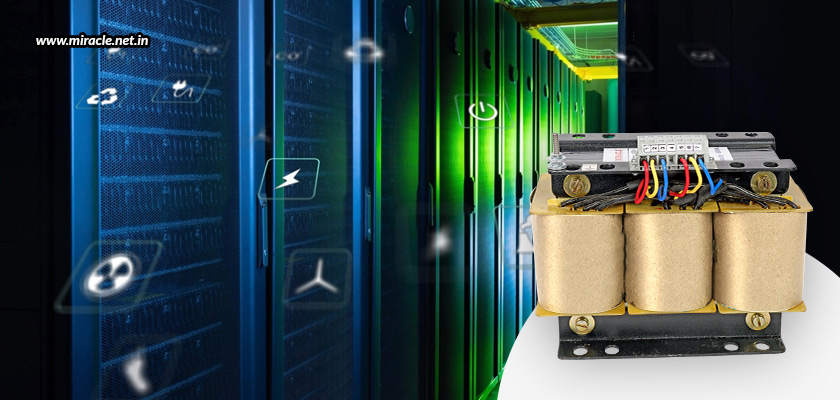
High-KVA transformers play an important role in transmitting and distributing large volumes of electrical power across long distances, making them the ideal choice for large industries, data centres, and infrastructure systems. But, with the rapid industrialization, digital transformation, and a global push towards sustainable energy practices, the design of these transformers has become more critical than ever. Higher KVA transformer manufacturers in India are now reimagining transformer designs with advanced materials, recyclable systems, enhanced construction, and improved thermal management. Trying a achieve a balance between performance and sustainability, manufacturers are building transformers that can remain durable and efficient even in the most demanding conditions, meeting the increasing global demand for energy without compromising long-term ecological integrity.
The expectations of modern power systems
Industrial growth, renewable energy integration, and sustainable practices that are rapidly rising today expect transformers to deliver higher loads with unwavering stability and minimal losses. Apart from the performance basics of voltage regulation, thermal performance, and efficiency, transformers are expected to stay sustainable too. This is why manufacturers are now focusing on creating transformers that are energy-efficient, environmentally responsible, and resource-optimized. This involves using recyclable materials and biodegradable insulating fluids, and minimizing core and copper losses to ensure reliability, longevity, and alignment with global sustainability and economy goals. By combining advanced engineering with eco-conscious design, modern high-KVA transformers are setting new benchmarks in energy efficiency, while supporting industries in their transition toward cleaner and more sustainable power systems.
The challenge: Performance vs. sustainability
While manufacturers are taking steps to balance performance with sustainability, the road to achievement isn’t easy. There are a number of challenges that need to be addressed before being able to achieve the right balance.
- Efficiency vs. material use: Achieving high efficiency often demands additional materials for winding and cores, improving performance but increasing material consumption, manufacturing complexity, and the overall environmental footprint.
- Durability vs. recyclability: Extending transformer lifespan requires specialized coatings, composites, and insulation systems that enhance durability, but may limit recyclability, posing challenges for eco-friendly end-of-life disposal.
- Cooling vs. energy consumption: Advanced cooling systems can improve heat dissipation and performance, but may increase auxiliary energy consumption, which can affect overall system efficiency.
- Cost vs. eco-friendly design: Using sustainable materials certainly reduces environmental impact, but also raises production costs, affecting affordability and large-scale adoption in competitive markets.
The goal is to optimize performance without compromising sustainability, ensuring that every design decision, from material choice to manufacturing processes, supports long-term environmental goals.
How high-KVA transformer design balances performance and sustainability
- Advanced Core Materials
Traditionally, grain-oriented silicon steel cores have been used for the material’s excellent magnetic properties. However, this material results in lots of energy being wasted as heat during magnetization and demagnetization cycles. This is why manufacturers are turning to amorphous metal cores, which have a disordered atomic structure that can drastically reduce hysteresis losses. These cores lower losses by up to 70% as compared to silicon steel cores, which translates to lower CO2 emissions over time. They also reduce heat generation, improve cooling efficiency, and enhance transformer lifespan due to these lowered operating temperatures. By adopting amorphous metals, manufacturers can thus enhance energy efficiency, while lowering the transformer’s carbon footprint.
- Innovative Winding Techniques
Copper has been the traditional choice for transformer windings, and continues to be the preferred choice due to its superior conductivity. However, high-conductivity alloys and optimized configurations can allow for reduced copper losses, lower energy consumption, and reduced use of raw materials. Moreover, innovative winding techniques can enhance both efficiency and sustainability. Techniques like interleaved, foil, and continuously transposed conductors can minimize hot spots and improve loa distribution. These innovations not only enhance transformer performance, but also reduce waste during manufacturing and extend equipment lifespan.
- Compact And Modular Designs
Every space today calls for compact and modular designs, and transformers are no exception to this evolving design approach. Compact and modular transformers mean reduced material usage, lighter weight, and easier maintenance and scalability through modular construction. This approach enables faster installation, flexibility in capacity expansion, and simplified transportation. It is particularly beneficial in urban infrastructure projects, renewable energy farms, and offshore platforms, where space constraints and energy efficiency are equally critical. By adopting compact, modular designs, manufacturers are making transformers smarter, more adaptable, and better suited for the evolving demands of modern power networks.
- Sustainable Insulation And Cooling Systems
Cooling and insulation are important for transformer reliability. Traditionally used mineral oil-based insulation fluids pose environmental risks due to poor biodegradability. Manufacturers are now moving to other sustainable alternatives like natural or synthetic esters as they are biodegradable and non-toxic, and have higher flash and fire points, which can prove to be safer. Esters also offer better moisture tolerance than mineral oils. Additionally, forced-air, forced-oil, and liquid-immersion cooling with ester fluids can also improve thermal management. Even better is switching to dry-type transformers that use air or resin insulation by eliminating liquid-based systems entirely, making them eco-sensitive and highly safe.
- Eco-Conscious Manufacturing And Supply Chain Practices
Apart from the materials and design, how the transformer is manufactured also influences its sustainability. Manufacturers are adopting green manufacturing initiatives like using renewable energy in production facilities, implementing lean manufacturing to minimize material waste, adopting modular designs to simplify repair and reduce disposal requirements, and recycling scrap materials. Many manufacturers are also conducting Life Cycle Assessments to evaluate the environmental footprint from raw material sourcing to end-of-life disposal. This holistic approach ensures that every transformer meets global sustainability benchmarks like ISO and RoHS compliance.
- Renewable Energy Integration
Renewable energy integration cannot be avoided in today’s ever-so-conscious eco-friendly world. High-KVA transformers designed for renewables incorporate adaptive voltage regulation systems to manage fluctuations, reinforced insulation to handle frequent switching, and smart grid communication capabilities for dynamic power management. By enabling all of this, transformers contribute directly to global decarbonization goals while maintaining performance consistency, ensuring that renewable power generation remains stable, efficient, and seamlessly integrated into modern energy networks.
- Recycling And End-Of-Life Management
Forward-thinking manufacturers do not limit their considerations to design and operation; they also think about what happens to the unit at the end of its service life. They focus on recycling and end-of-life management, emphasizing the reclamation and reuse of valuable materials. This includes purifying and reusing transformer oils, recovering insulation materials for secondary applications, and reclaiming metals for future manufacturing. Such practices significantly reduce landfill waste, conserve natural resources, and promote a closed-loop system that supports sustainable production, ensuring that environmental responsibility extends throughout the entire lifecycle of high-KVA transformers.
The Miracle Electronics approach: Excellence in performance and sustainability
Miracle Electronics, one of the leading higher KVA transformer manufacturers in India, exemplifies the perfect balance between performance and sustainability in high-KVA transformer design. Their high-efficiency, custom-built transformers are engineered with low-loss cores, precision windings, and eco-friendly insulating fluids. By integrating modern technologies and advanced cooling systems, Miracle Electronics ensures long-term reliability, optimized power factor, and reduced operational waste. In line with global sustainability goals, the company focuses on eco-friendly manufacturing by using recyclable materials, following international energy efficiency standards, and designing transformers that reduce power loss during transmission. Whether for data centres, renewable energy projects, or industrial applications, Miracle Electronics’ higher KVA transformers deliver robust performance, while supporting the transition to a cleaner and more energy-efficient future.
As global power demand continues to rise, there needs to be a balance between performance and sustainability. High-KVA transformers are central to this evolution, approaching energy efficiency and environmental stewardship with innovation and optimization. By adopting sustainable design principles today, manufacturers and industries can ensure that tomorrow’s transformers deliver more than just power; they deliver progress toward a greener planet!