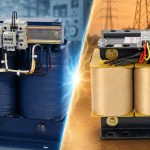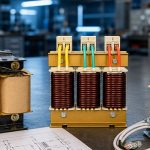
Three-phase transformers play a crucial role in modern power distribution systems, providing stable voltage conversion, efficient energy transfer, and dependable operation for industrial, commercial, and utility-scale infrastructures. However, choosing the right transformer involves more than just looking at the kVA rating. An inadequately specified transformer can result in overheating, inefficiency, early failure, and unanticipated operational downtime. Many of these problems stem not from defects in the equipment itself, but from errors made during the procurement and specification process. This blog outlines five significant mistakes to avoid when sourcing a three-phase transformer, and discusses how careful planning can ensure long-term performance, safety, and cost-effectiveness.
Mistake 1. Incorrect specification of load requirements
One of the most frequent and expensive errors is the improper definition of load requirements. Transformers are often chosen based solely on current demand, neglecting future growth or variable load conditions. However, both undersizing and oversizing present their own challenges. Undersizing a transformer can lead to persistent overloading, excessive heat generation, and deterioration of insulation. Conversely, oversizing can cause inefficient operation and increased no-load losses.
Common mistakes
- Estimating only current load without considering future growth
- Disregarding peak demand periods
- Neglecting motor starting currents and inrush loads
- Failing to account for non-linear loads like drives and electronic systems
Recommended actions
Accurate load forecasting is crucial. Engineers must assess both steady-state and peak loads while factoring in future expansion plans. A safety margin is generally included to ensure the transformer operates within optimal thermal limits without being excessively oversized. Proper load evaluation guarantees balanced performance, enhanced efficiency, and a longer lifespan for the transformer.
Mistake 2. Ignoring insulation class and thermal performance
Insulation is a crucial yet frequently neglected factor in transformer selection. The insulation system plays a vital role in a transformer’s ability to endure heat over extended operational periods. Each insulation class specifies a maximum temperature threshold, and surpassing this threshold hastens aging, thereby significantly diminishing the transformer’s lifespan.
Common mistakes
- Choosing insulation without factoring in ambient temperature
- Believing that all insulation classes perform uniformly under stress
- Disregarding high-temperature industrial settings
- Neglecting the long-term effects of thermal aging
Recommended actions
Insulation classes should be chosen based on actual operating conditions. In environments with high loads or elevated temperatures, opting for higher-grade insulation enhances durability and safety margins. Additionally, thermal design must consider ventilation, cooling systems, and load cycles. Selecting the appropriate insulation ensures consistent long-term performance and minimizes the likelihood of unforeseen failures.
Mistake 3. Improper kVA sizing and load growth planning
The kVA rating is a crucial factor in transformer selection, yet it is often miscalculated or undervalued. When a transformer operates at or above its rated capacity, it can lead to overheating, increased losses, and diminished efficiency. Conversely, excessive oversizing can result in inefficient energy use.
Common mistakes
- Choosing based solely on the current connected load
- Neglecting future expansion or production scaling
- Failing to consider diversity factors in load usage
- Ignoring harmonic effects that can elevate apparent load
Recommended actions
To ensure proper kVA sizing, it is essential to take into account current demand, anticipated future growth, and operational diversity. Engineers should also consider efficiency curves and loading profiles instead of depending on fixed values. A transformer that is correctly sized guarantees optimal performance under varying load conditions and significantly lowers lifecycle costs.
Mistake 4. Selecting the wrong voltage configuration
Voltage mismatch is a significant yet preventable problem that can cause equipment damage, system instability, and hazardous operating conditions. It is essential for transformers to accurately match both primary and secondary voltage specifications. Even minor discrepancies can lead to inefficient performance or equipment failure.
Common mistakes
- Misinterpreting system voltage specifications
- Neglecting regional or facility-specific voltage regulations
- Disregarding compatibility with downstream devices
- Failing to check phase configuration and vector group
Recommended actions
Voltage selection should align with the requirements of both the supply side and the load side. Engineers must review system design documentation to ensure compatibility with all connected devices. Additionally, careful consideration of vector group selection is necessary to maintain phase alignment and facilitate safe parallel operation when applicable. Proper voltage configuration is crucial for system stability, equipment protection, and enhanced overall efficiency.
Mistake 5. Choosing the wrong cooling method
Cooling is essential for the performance and longevity of transformers. A common error is choosing an unsuitable cooling system, which can result in overheating and early failure. Transformers produce heat consistently during their operation. If cooling is inadequate, temperatures can exceed safe thresholds, leading to insulation damage and decreased efficiency.
Common mistakes
- Utilizing air-cooled systems in high-load situations
- Installing oil-cooled units in areas with poor ventilation
- Neglecting ambient temperature factors
- Disregarding the maintenance needs of cooling systems
Recommended actions
Cooling system selection should consider load intensity, installation conditions, and duty cycle. Dry-type transformers are ideal for clean, indoor settings, whereas oil-cooled systems are more appropriate for heavy-duty and high-capacity uses. Additionally, effective airflow design, appropriate ventilation spacing, and thermal monitoring can significantly improve cooling efficiency and help prevent overheating.
The importance of getting transformer selection right
Transformer sourcing transcends mere procurement; it represents a strategic operational approach for the long term. Any errors in specifications can lead to substantial financial setbacks, energy inefficiencies, and system outages. A well-chosen three-phase transformer provides:
- Consistent voltage regulation
- Minimized energy losses
- Enhanced thermal performance
- Extended operational lifespan
- Reduced maintenance expenses
- Improved system reliability
Industries that prioritize accurate specifications and thorough engineering assessments enjoy greater efficiency and reduced lifecycle risks. Miracle Electronics supports precise transformer selection with engineered reliability and performance. As trusted three phase transformer suppliers USA markets rely on, they deliver efficient, durable solutions that ensure correct specifications, optimal load handling, and long-term operational stability across demanding applications.
Selecting a three-phase transformer requires a meticulous balance of technical accuracy, operational insight, and strategic foresight. Mistakes in specifications, insulation choices, kVA sizing, voltage setups, or cooling techniques can drastically affect efficiency, safety, and overall dependability. Such errors frequently result in overheating, energy wastage, and unanticipated system failures, escalating operational expenses and shortening equipment lifespan. By steering clear of these critical missteps during the selection phase, organizations can secure stable and efficient transformer performance under diverse load and environmental conditions. A correctly chosen transformer not only fulfils present operational requirements but also accommodates future growth, enhances system resilience, and ensures long-term power reliability.