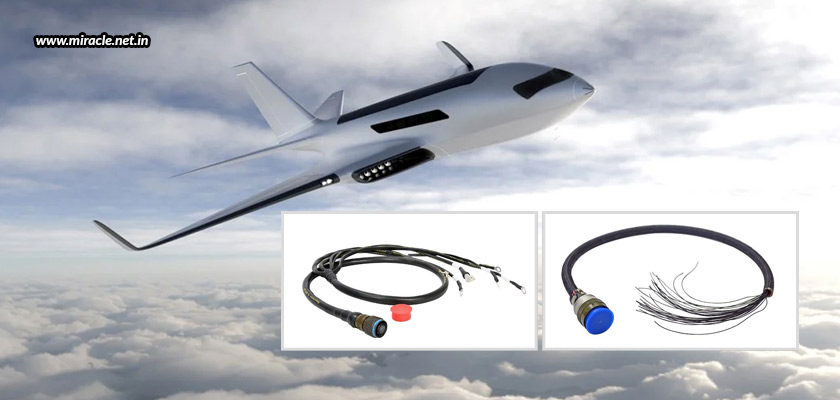
Aircraft cables serve as the often-overlooked champions of aviation engineering. Frequently concealed behind elegant panels and composite exteriors, these robust wire ropes are crucial to the performance, control, and safety of today’s aircraft. Whether they are guiding mechanical control surfaces, maintaining structural integrity, or facilitating sophisticated safety systems, aircraft cables are intricately integrated into almost every aspect of an aircraft’s design. This blog delves into the incorporation of cables within the overall framework of modern aircraft, their direct influence on performance and safety, and how their application and assembly differ from those in other industries like marine, automotive, and construction.
Aircraft cables – An essential component for mechanical functionality
Aircraft cables consist of robust, flexible strands made up of multiple wires twisted into a helical shape. These cables are generally constructed from stainless steel or galvanized carbon steel, and more recently, advanced synthetic fibres. Their main purpose is to convey mechanical force or sustain tension in various aircraft systems. In contemporary aircraft design, cables play crucial roles in flight control systems, landing gear deployment, bracing structures, safety and restraint systems, and parachute deployment mechanisms. As aircraft technology has progressed, so have the materials and methods used in cable construction. With the ongoing trend towards lighter, more fuel-efficient airframes and increasingly automated control systems, modern cable assemblies are required to be lightweight, resistant to corrosion, and engineered with precision to meet stringent standards.
Integration of cables in aircraft design
Modern aircraft design involves a meticulous balance of aerodynamics, weight distribution, material science, and system reliability. Cables play a crucial role in this design in several significant ways.
- Primary flight control systems
Before fly-by-wire technology became prevalent, flight control systems primarily used cable-operated mechanisms. Many aircrafts still rely on these cables as main or backup systems. However, proper routing is essential to ensure reliability, prevent interference, reduce tension loss, and protect against vibration and fatigue, ensuring consistent performance under all conditions.
- Structural integrity and support
Aircraft cables also serve as bracing elements to bolster structural components. For instance, in smaller aircrafts, cables are utilized to strengthen wing structures or landing gear mechanisms. In these scenarios, they must maintain constant tension and withstand fatigue over numerous flight hours.
- Weight management
Weight is a vital consideration in aircraft design. Every pound saved in cable assemblies can enhance fuel efficiency and increase payload capacity. This is why materials like stainless steel are chosen for their high strength-to-weight ratio, while synthetic materials like Kevlar are employed in non-critical applications that require lightweight characteristics.
Safety and performance
Aircraft cables play a vital role in ensuring both the safety and performance of an aircraft. Their influence can be divided into three primary categories –
- Reliability under stress
Aircrafts function in harsh conditions, ranging from frigid altitudes to humid coastal areas. Cables must endure temperature variations, vibrations, pressure changes, and mechanical stress without losing their effectiveness. Stainless steel cables, known for their resistance to corrosion and high tensile strength, are preferred for such high-stress situations.
- Redundancy and safety systems
Numerous safety-critical systems rely on aircraft cables, such as escape hatches, emergency control backups, and restraint systems. Their operation must be failsafe – a single failure could endanger the entire aircraft. Consequently, aerospace regulations mandate extensive testing, which includes assessments of tensile strength, flexibility, corrosion resistance, and fatigue cycles.
- Performance optimization
Aircraft designers strategically select cable routing to enhance response times, reduce control lag, and maintain balance. This level of precision leads to improved handling, decreased pilot workload, and greater passenger comfort. Ensuring proper tension and minimizing friction within pulley systems are essential for achieving these objectives.
Cross-industry comparison – What sets aircraft cables apart?
While cable assemblies find extensive application across various industries, aircraft cables function under distinctly different conditions and specifications. Let’s examine the use of aviation cables in comparison to those in the marine, automotive, and construction industries.
- Marine industry
Similarities: Corrosion resistance is essential in both aircraft and marine settings. Stainless steel is commonly utilized in both fields.
Differences: Marine cables typically experience extended exposure to saltwater and less vibration. Although strength is important, flexibility and fatigue resistance are not as critical as they are in aviation.
- Automotive industry
Similarities: Cables are employed in brake systems, window regulators, and throttle controls. Both industries prioritize strength and compact design.
Differences: Automotive cables function under lower loads and do not encounter the same stress variations caused by altitude. While safety factors remain significant, the repercussions of failure are generally less severe.
- Construction industry
Similarities: Construction cables, particularly in cranes or suspension systems, require high tensile strength. Galvanized cables are prevalent in both industries.
Differences: Construction cables usually concentrate on static loads, while aircraft cables are dynamic — consistently in motion and subjected to vibration, flexing, and environmental fluctuations.
Aircraft cables — The backbone of modern aviation
Aircraft cables are not just mechanical components; they are meticulously engineered lifelines that connect modern aircraft, guarantee safe control, and improve flight performance. Their function encompasses various systems, each with distinct demands and performance criteria. In contrast to marine, automotive, or construction applications, aircraft cables encounter uniquely rigorous standards for weight, reliability, and environmental resilience. With advancements in materials and assembly techniques, their significance continues to increase alongside the changing philosophies of aircraft design.
Where to get the finest aircraft cables?
When selecting the appropriate cable for your aircraft application, understanding its design function, safety role, and adherence to industry-specific standards is critical, especially in an environment where performance is paramount. That’s why Miracle Electronics, recognized as the leading aerospace cable harness manufacturer in India, offers tailored solutions that not only meet international aerospace standards, but also ensure consistent, high-performance results through expert material selection, precision assembly, and rigorous testing. With decades of industry experience and a commitment to quality, Miracle Electronics supports both commercial and defence aviation industries. Their state-of-the-art manufacturing facilities and skilled engineering team make them a trusted partner for reliable, mission-critical cable solutions.