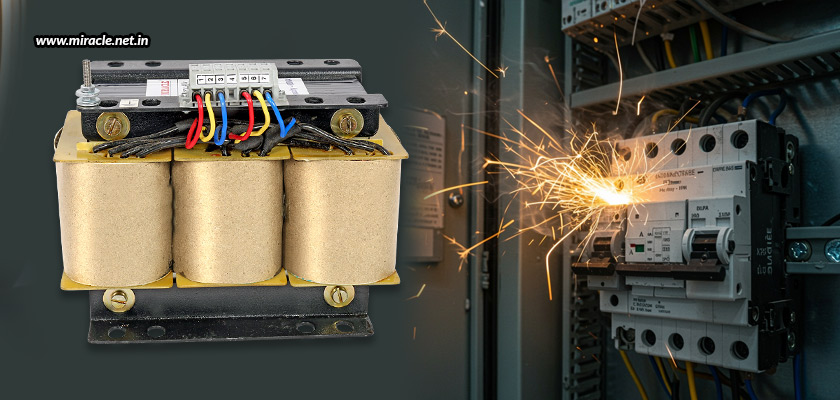
Three-phase transformers are a preferred choice in electrical power systems, facilitating the efficient transmission and distribution of electricity. Although their normal operation is generally stable, these transformers must also withstand extreme, short-term electrical stress, particularly during a short circuit. The short-circuit withstand capacity of a three-phase transformer indicates its capability to endure the thermal and mechanical forces that occur under such abnormal circumstances. Understanding this capacity is vital not only for design engineers and utility planners, but also for end-users and maintenance teams who strive to maintain system reliability and safety.
What is short-circuit withstand capacity?
Short-circuit withstand capacity denotes a transformer’s ability to resist thermal and mechanical stress induced by a short-circuit current for a designated duration without incurring damage. This ability is essential because short circuits generate extremely high current levels, often ranging from 10 to 30 times the rated current. These elevated currents persist for mere fractions of a second but impose significant mechanical and thermal stresses on the windings and core. If the transformer fails to withstand these conditions, it may lead to catastrophic failures, fires, or interruptions in service.
Types of short-circuits that impact transformers
Before we delve into capacity calculations and design, it is crucial to comprehend the various types of short-circuits that can influence transformers.
- A prevalent fault is the line-to-line fault, which happens when two phase conductors make contact, circumventing the load and permitting current to flow directly between the phases.
- Another type is the line-to-ground fault, where a single phase conductor comes into contact with the earth or a grounded surface, frequently leading to elevated fault current levels due to the low impedance path.
- The most critical, albeit uncommon, is the three-phase fault, where all three phases short-circuit together, resulting in the highest degree of mechanical and thermal stress on the transformer.
Each of these faults produces distinct magnitudes and waveforms of fault current, which significantly affect the transformer’s necessary short-circuit withstand capacity.
Key factors that affect withstand capacity
Several critical factors influence a transformer’s ability to withstand short-circuit conditions, each playing a role in determining how well the unit can handle extreme thermal and mechanical stress during faults.
- Transformer design: The internal structure of the transformer is a significant factor. For example, concentric winding configurations offer enhanced mechanical stability, and sturdy clamping and bracing systems withstand the forces generated by the magnetic fields.
- Impedance of the transformer: The impedance of the transformer restricts the fault current. Higher impedance results in reduced short-circuit current, but increased voltage drop, while lower impedance results in elevated current during fault conditions.
- Material strength: Copper or aluminium windings, insulation materials, and mechanical supports must all be capable of withstanding thermal stress and electromagnetic stress.
By optimizing these factors during design and manufacturing, engineers can ensure that three-phase transformers remain safe, stable, and operational even under high-stress fault scenarios.
Techniques for enhancing withstand capacity
Enhancing a transformer’s short-circuit withstand capacity involves a combination of advanced design and material choices. Employing superior insulation, optimized winding configurations, robust support structures, and effective cooling systems ensures transformers can reliably endure fault conditions without sustaining damage.
- Implementation of superior insulation
High-grade insulation materials such as Nomex, Mylar, or epoxy-impregnated systems are selected for their exceptional thermal resistance. These materials help prevent insulation failure during high fault currents and prolong transformer lifespan by resisting heat-related degradation.
- Enhanced winding configuration
Designing windings with concentric coils, interleaved layers, and balanced magnetic field distribution minimizes local stress accumulation. This not only boosts mechanical strength but also improves short-circuit resistance by averting distortion.
- Axial and radial support structures
Bracing systems are utilized to securely hold windings in position, countering deformation from sudden mechanical impacts. Adequate axial and radial support are crucial for maintaining winding alignment and preventing long-term structural fatigue following a fault.
- Cooling through oil or air
Efficient cooling mechanisms, such as mineral oil baths or forced air systems, effectively dissipate the excess heat produced during a fault. By keeping temperature levels within safe limits, these systems safeguard insulation and winding integrity during short-circuit incidents.
By integrating these techniques – high-grade insulation, precise winding design, strong mechanical bracing, and efficient cooling – manufacturers significantly improve transformer durability and safety. These measures are essential for maintaining performance and preventing failures during short-circuit events, ensuring long-term operational reliability.
Consequences of insufficient withstand capacity
If a transformer is not engineered to endure short-circuit conditions, several serious hazards may arise, potentially compromising both safety and system reliability. These risks include:
- Permanent deformation of windings, caused by strong mechanical forces during fault conditions.
- Internal insulation failure, which can lead to partial discharge, arc faults, or complete electrical breakdown.
- Formation of hot spots, accelerating insulation aging and significantly shortening the transformer’s lifespan.
- Explosions or fires, particularly in severe cases where internal pressure and temperature rise uncontrollably.
- Power outages and reputational damage, affecting the utility or industrial operation by causing service interruptions and loss of stakeholder trust.
Designing transformers with adequate short-circuit withstand capacity is therefore essential for long-term performance and safety.
Role of protective devices
Although transformers are built to endure the thermal and mechanical stresses associated with short-circuits, protective devices like circuit breakers, protective relays, and fuses are crucial for ensuring system safety. These devices respond quickly to identify faults and isolate the affected section from the power system, thus preventing extended exposure to high fault currents. Their rapid action helps reduce damage to both the transformer and adjacent equipment. Nevertheless, a transformer must be sufficiently robust to withstand fault conditions for the short duration it takes for these protective devices to function, thereby ensuring continuous system reliability and preventing catastrophic failures.
The short-circuit withstand capacity of three-phase transformers is a vital design and performance metric, safeguarding the integrity and durability of power systems. As the demand on grid infrastructure grows and load dynamics become more complex, transformers must not only perform efficiently under normal conditions but also remain resilient during faults. By complying with international standards, applying sound engineering practices, and incorporating strong protection mechanisms, manufacturers and system planners can guarantee that transformers maintain reliable power delivery, even under extreme conditions.
As a trusted three phase transformer manufacturer in India, Miracle Electronics combines engineering excellence with rigorous quality control to deliver transformers that are built to last, even under extreme short-circuit conditions. With expertise in designing custom three-phase transformers for industrial, medical, defence, and power applications, Miracle Electronics ensures that each unit meets stringent performance and safety standards. From robust winding geometry to enhanced insulation and bracing systems, every transformer is engineered to handle mechanical and thermal stress reliably. With a strong commitment to innovation and customer satisfaction, Miracle Electronics stands out as a reliable partner for critical power infrastructure across India and beyond.